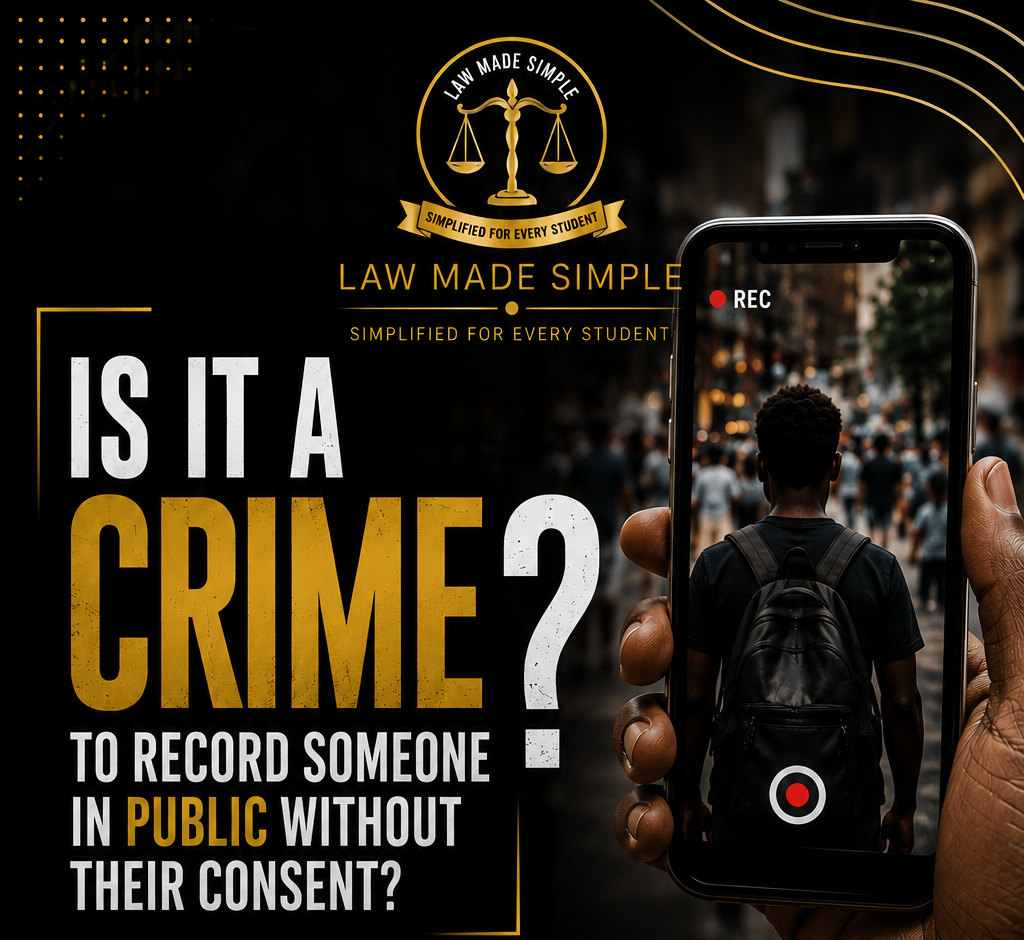
Is It a Crime to Record Someone in Public Without Their Consent?
You’re walking back from class for example , looking so tired, probably not even looking your best, that day perhaps you had very low energy to look like you would normally look . When suddenly, someone points a camera at your face.
At first, you think maybe it was a mistake.But a few hours later, you open TikTok or Instagram and realise you’ve become part of somebody’s “content.”
Maybe it was a prank video. Maybe a street interview. Maybe you were just passing by in the background. Funny?Maybe, Uncomfortable? very possible.
And it raises an important question:
Can someone legally record you in public without your consent?
These days, almost everybody is creating content. Phones are everywhere. Cameras are everywhere. From vloggers to prank creators to random “public interviews,” people are constantly recording moments around them.
Sometimes it feels harmless. Sometimes it feels invasive.
But, what does the law actually say?
The truth is, the answer is not as straightforward as “yes” or “no.”
Generally, when you are in a public place, your expectation of privacy is lower than when you are in a private space. That is one reason why people can record public events, crowded places, concerts, roads, and other open environments without necessarily committing a crime.
So, simply appearing in someone’s video in public is not automatically illegal.But that does not mean people have unlimited freedom to record others however they want.
However, the situation changes when the recording begins to cross certain lines.
For example, recording someone in a way that humiliates, harasses, threatens, or invades their dignity can become legally problematic. The same applies where the recording is used for cyberbullying, defamation, blackmail, or sexual harassment.
Imagine someone secretly recording another person in a vulnerable situation just to post it online for laughs or attention. At that point, the issue is no longer “just content.” Questions of privacy, dignity, and even cyberstalking can arise.
Under Nigerian law, certain rights are protected, including the right to dignity of the human person and, in some situations, privacy rights. The Cybercrimes Act may also become relevant where online harassment or harmful digital conduct is involved.
This means that while recording in public may not always be a crime, it all depends on the purpose, manner, and effect of the recording and it matters a whole lot.
Honestly, beyond legality, there is also the human side of it. Not everything should become content. Creators this days in a quest to always have clicks and engagement just post anything at any time. No discipline nothing. Social media has made people forget that strangers are still human beings deserving of respect. Sometimes, in the rush to go viral, basic courtesy disappears completely.
You see creators putting cameras in random people’s faces without warning. The height of it is having to record emotional moments. Recording vulnerable situations. Recording people who clearly look uncomfortable. Instead of being swift about helping people at times the first thing on their thought is to bring out a camera.
And the excuse is usually: “But it’s public.”
Yes, it may be public. But public does not always mean permissionless.Consent still matters. Respect still matters. Sometimes, the better question is not just: “Can I record this?”
But: “Should I?”because not everything legal is respectful.
At the end of the day, the law tries to balance two things: freedom in public spaces and protection of human dignity. And in a digital age where almost everything can end up online within seconds, that balance matters more than ever.
So, is it a crime to record someone in public without their consent?Not always.
But depending on how the recording is done and what it is used for, it can cross legal and ethical boundaries very quickly. Exactly that is the real conversation we should be having.
Law Made Simple — where we don’t just read the law, we understand it.
This is educative, now I understand what privacy means. Thank you.