 . You read the case. You understood it.
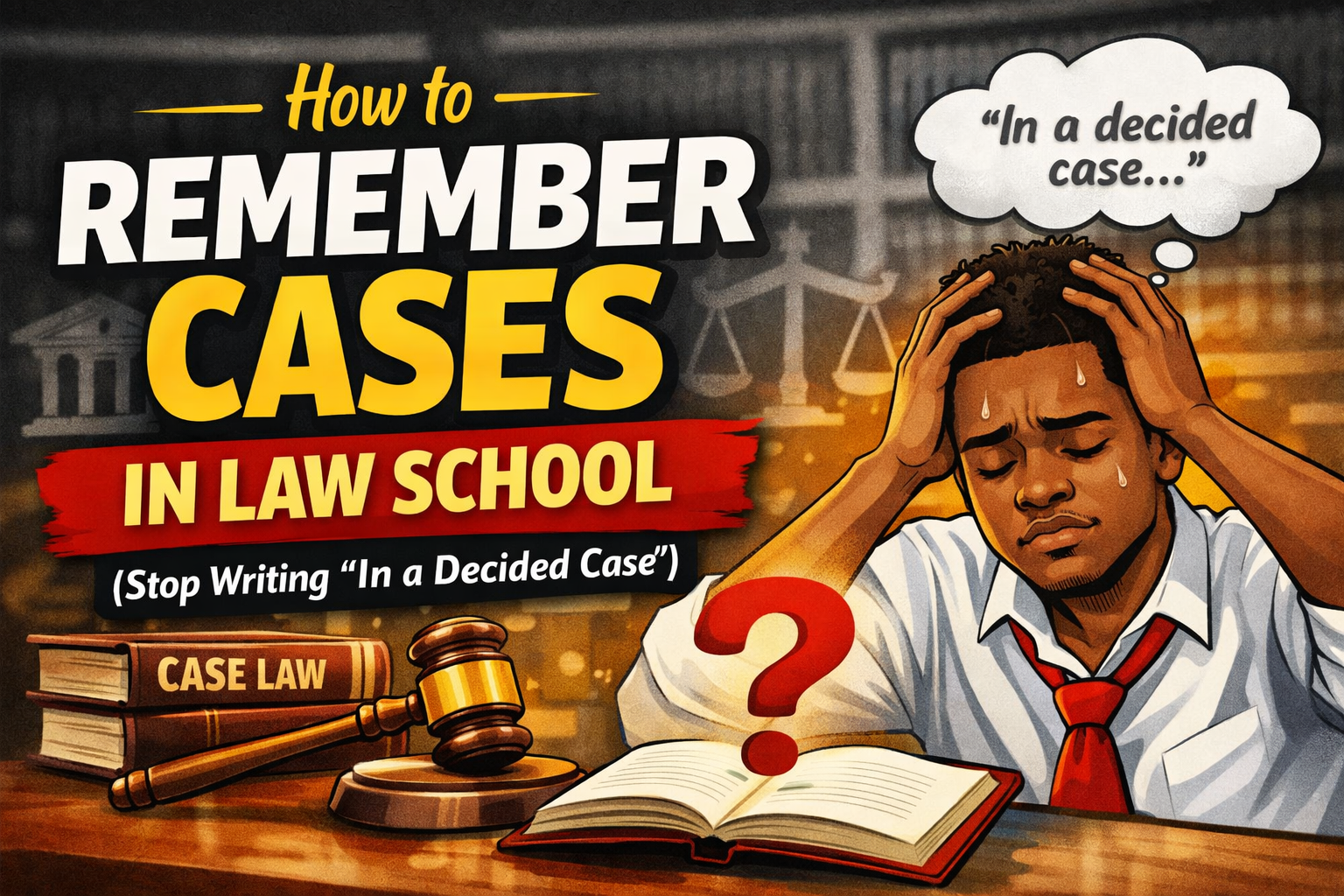
You even highlighted it. But in the exam hall…“In a decided case…” If you’ve ever been here, you’re not alone.
The actual problem is not that you didn’t read.The problem is what you do to read. The thing is most of us read cases like stories, not like tools and when it’s time to use them in the exam hall, everything just disappears and your brain fails to remind you.
Over time, I’ve realised that remembering cases is not just about cramming everything. It’s about understanding what works for you.
Different Ways to Read and Remember Cases
Not everyone studies the same way. It’s a now known fact some of us are the all nighters, some of us are the midnight Watchmen etc .Here are a few methods that actually work:
1. The “Understand First” Method : This is for people who like clarity. They read to literally know about the concept and even be able to defend it.
Instead of trying to cram the whole case, focus on:
i.What the legal principle is?In law, one thing leads to another, there’s always a principle and basics to every concept and that’s where understanding should begin.
ii. Why was this case decided this way?Personally, what works for me is that I try to break cases down to the concept behind them because once you understand the principle,
you can always explain it even if you forget small details.
2. The “Create Scenarios” Method:
This one is underrated. When I read cases, I sometimes create personal or imaginary scenarios in my head.I ask myself:
“What if this happened to me?”It makes the case more real and easier to remember seeing anything related to the case my brain just connects and yes it becomes useful.
3. The “Less Is More” Method
This one changed everything for me.You don’t need 10 cases for one topic.
Sometimes: 2–3 strong, well-understood cases are enough Personally I believe cases are not meant to impress your lecturer.They are meant to support what you understand. Reading quite a lot of cases and trying to
4. The “Say It Out Loud” Method Before exams, I try to:
1.Speak cases out loud
2.Explain them like I’m teaching someone: You’d be surprised how much you remember when you hear yourself say it.
Let me quickly illustrate to us a practical application of the method that actually works for me .
How I Would Read a Case
Let’s take a popular case on false imprisonment: Bird v Jones
A man (Bird) was walking on a public bridge.Part of the bridge was blocked off for an event, and he was stopped from going forward. He could still go back the way he came but he insisted on passing through.
When he was prevented, he sued for false imprisonment. The court held that this was NOT false imprisonment.
Why?because he was not completely restricted. He still had a way to leave.
NOW,to make you understand better
Step 1: Understand the Principle
From this case, I’ll ask: What is the rule here?
False imprisonment requires total restraint.Not just partial restriction.
Step 2: Create a Scenario
Then I imagine: What if I’m in school and someone blocks one gate, but I can still leave through another?
That is NOT false imprisonment. But if all exits are blocked? That’s false imprisonment.
Step 3: Reduce It to One Line
Bird v Jones → No false imprisonment if there is a way to escape
Step 4: Say It Out Loud
Then I can explain it like: “In Bird v Jones, the court held that there is no false imprisonment where the claimant is only partially restricted and still has a means of escape.”
You sure must have gotten the concept now right? Good!
The hard truth is that you cannot do everything at once. You can’t: cram everything, understand everything deeply, memorise perfectly. It’s difficult and that’s okay. The goal is to find what works best for you and stick to it.
Finally, the exam hall is not the place to start remembering cases.It’s the place to recall what you’ve already understood. So next time you’re reading cases, ask yourself:“Do I understand this… or am I just reading it?”
Remember it’s not all perfection try things that works best for you. Till I come your way again stay blessed.
Nice lawyer
An excellent work
Thank you
Nice bby lawyer
An excellent work keep the flag flying
Great work, indeed this is solution page.
I’m so glad you found it helpful.